We need to talk about Grandma: How a language app kept us close across generations
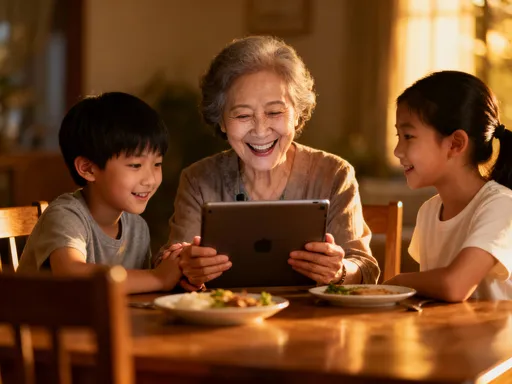
Family dinners used to feel incomplete—Grandma sat quietly, smiling but disconnected, while we chatted in a language she barely understood. I wanted her to feel included, not just present. Then we tried something small: a simple language-learning app, used together. It wasn’t about fluency. It was about connection. Within weeks, she greeted us in our tongue, we answered in hers, and laughter became our shared vocabulary. This is how technology didn’t replace our bond—it deepened it.
The Silent Dinner Table: When Love Isn’t Enough to Bridge the Language Gap
There’s a kind of quiet that feels louder than any argument. It’s the silence of someone you love sitting right beside you, smiling, nodding, but not really hearing you. That was our Sunday dinners for years. The table would be full—steaming dishes, the kids chattering, stories flying back and forth—but Grandma would sit at the end, hands folded, eyes warm but distant. She’d laugh when everyone else did, not because she got the joke, but because she wanted to belong.
I remember one evening, my nephew shared a school story—something about a lost science project and a very confused hamster. The whole table erupted in laughter. I glanced at Grandma. She was smiling, clapping gently, but her eyes flickered with confusion. That moment hit me like a whisper you can’t unhear: we were all speaking, but she wasn’t part of the conversation. And it wasn’t for lack of love. We loved her deeply. We visited, we cooked her favorite meals, we made sure she was comfortable. But comfort isn’t connection.
The truth is, language isn’t just words. It’s the texture of relationship—the jokes, the teasing, the quiet reassurances, the way you say “I’m here” without even trying. When that’s missing, even the warmest home can feel lonely. Grandma didn’t complain. She never asked us to slow down or translate. But I started noticing the little things: how she’d retreat to her room early, how her responses became shorter, how she’d watch our mouths when we spoke, like she was trying to read the meaning between the sounds. The barrier wasn’t distance. It was difference. And suddenly, I realized: love wasn’t enough to cross it. We needed a bridge. What we didn’t know yet was that the bridge could fit in the palm of our hands.
Discovering the Right Tool: Not Just Any App, But One Built for Real Life
At first, I thought, “Okay, let’s just download a language app.” How hard could it be? I tried a few—flashy ones with leaderboards, ones that felt like quizzes, ones that promised fluency in 30 days. None of them felt right. They were built for travelers or students, not for a 78-year-old woman who still thought “Wi-Fi” was a kind of tea. They moved too fast, judged too quickly, and made her feel like she was failing before she even started.
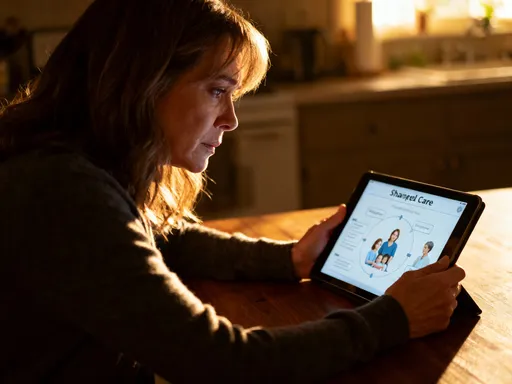
Then I found one that was different. It didn’t care about scores. It didn’t shame you for getting a word wrong three times. Instead, it asked gently: “Want to try again?” It had a voice recorder so she could speak a phrase and play it back slowly. That was huge. She could hear herself, adjust, try again—no audience, no pressure. And it worked on her tablet, the same one she used to look at family photos and watch old movies. That familiarity mattered. She didn’t have to learn a new device, just a new way to use the one she already loved.
The first time she tapped “Start Lesson” on her own, I nearly cried. It was a simple verb: “to eat.” The app showed a picture of a bowl of soup, played the word slowly, then asked her to repeat it. She did—softly, carefully. The app didn’t say “Correct!” in a robotic voice. It said, “Nice try! Let’s do it together,” and played it again. That small kindness—treating mistakes as part of learning, not failure—changed everything. This wasn’t just an app. It was a patient teacher, a quiet companion, a door slowly opening.
Learning Together, Not Alone: Turning Lessons into Family Moments
The real shift happened when we stopped treating this as “Grandma’s project” and started making it ours. At first, it was me sitting with her, helping her tap the screen. Then my daughter joined. Then my husband. Soon, we made it a ritual: ten minutes after dinner, everyone grabs a tablet or phone, puts on headphones, and we all do the same lesson together. It sounds simple, but it transformed everything.
Imagine this: the kitchen is still warm from dinner, dishes half-cleared, and there we are—three generations, heads bent over screens, repeating the same sentence: “I like to drink tea in the morning.” My son mispronounces “morning” as “moaning,” and we all burst out laughing. Grandma tries “tea” but says “tie,” and now she’s giggling too. These moments weren’t just about language. They were about joy. About being silly together. About showing Grandma that it’s okay not to be perfect—that we’re all learning, all the time.
And it went both ways. She started teaching us, too. Not just the words from the app, but old phrases from her childhood, words that don’t exist in the modern version of her language. She’d say them softly, like secrets, and we’d write them down. The app gave us the structure, but the heart came from her. We weren’t just transferring information. We were sharing stories, history, identity. The tablet became a bridge, but the love was the foundation.
Small Wins, Big Feelings: From First Words to Full Conversations
Progress didn’t come in leaps. It came in breaths. The first time she said, “I understand,” without pausing to translate in her head—that was a victory. The first time she asked my daughter, in our language, “Did you sleep well?” without prompting—that felt like a miracle. These weren’t just language milestones. They were emotional breakthroughs.
Then came the day she made a joke. We were learning weather phrases, and the app said, “It’s sunny today.” She repeated it, then added, with a twinkle, “But my tea is still cold.” We all froze—then exploded in laughter. Not because it was the funniest joke, but because it was hers. She wasn’t just repeating. She was creating. She was part of the conversation.
We started using the app’s voice note feature to leave little messages. I’d record, “Good morning, Mama,” and she’d reply, “Good morning, my heart.” My kids sent her songs they sang in school, and she’d sing back an old lullaby in her language. We began recording her stories—how she used to walk to school barefoot, how she met Grandpa at a market, how she learned to make the perfect dumpling. The app didn’t just help her speak our language. It helped us hear hers. And in those recordings, I realized: we weren’t just preserving words. We were preserving her.
Beyond Translation: How Language Learning Became Emotional Care
Helping Grandma learn wasn’t just about communication. It became a daily act of love. Every time she opened the app, she was saying, “I want to be part of your world.” And every time we joined her, we were saying, “Your world matters to us.” That exchange—small, quiet, consistent—was care in its purest form.
There’s a dignity in being understood. In having your voice heard. When Grandma started speaking more, she also started sharing more. She’d comment on the news, ask about the kids’ friends, even give advice—sometimes unsolicited, always welcome. She wasn’t just present. She was participating. And that changed how we saw her. Not as someone we needed to care for, but as someone who still had so much to give.
Technology didn’t replace our conversations. It made them possible. It didn’t erase the years or the accents or the misunderstandings. But it gave us a way through them. And in doing so, it reminded us that care isn’t just about doing things for someone. It’s about making space for them—to speak, to be heard, to belong. The app was the tool, but the love was the engine.
Making It Work Every Day: Practical Tips for Busy Families
I know what you’re thinking: “We’re busy. How do we add one more thing?” The truth is, we didn’t add anything. We just reshaped a few minutes we already had. Here’s what worked for us—and what might work for you.
First, tie it to a habit you already have. We do our lessons right after dinner, while the table is still warm. No special time, no extra effort. It’s just part of the rhythm. Second, use what’s already meaningful. We used family photos as vocabulary prompts. A picture of the beach? That’s “sand,” “water,” “sun.” A photo of the kids in costumes? “Halloween,” “mask,” “candy.” Learning feels lighter when it’s about your life.
Third, celebrate mistakes. We made a rule: if someone messes up, we cheer. It sounds silly, but it removes the fear. Grandma used to freeze if she got a word wrong. Now she says, “Ah, my brain is taking a nap!” and we all laugh. Fourth, use devices they already know. She didn’t need a new phone. Her tablet was enough. And finally, start small. Five minutes. One phrase. One word. Consistency beats intensity every time. You don’t need to change everything. Just begin.
A Language of Love: When Technology Helps Us Stay Human
In the end, the app didn’t just teach us words. It taught us how to listen. Not just to sentences, but to silences. To effort. To the courage it takes to try something new, no matter your age. It taught us that connection isn’t about perfection. It’s about showing up, again and again, even when it’s hard.
Our family dinners are different now. Grandma still sits at the end of the table, but she’s in the middle of the conversation. She asks about school, comments on the weather, tells stories we’ve never heard. And when we laugh, it’s because we all understand the joke.
This journey wasn’t about mastering a language. It was about mastering presence. About using a simple tool to do something ancient and essential: stay close. Because families aren’t just built on blood. They’re built on moments—shared meals, shared words, shared laughter. And sometimes, all it takes is a little app, a little patience, and a lot of love to turn silence into song. Technology, at its best, doesn’t pull us away from what matters. It helps us hold on tighter.