Tired of Worrying About Your Home When You’re Out with Friends? These Motion Sensors Brought Me Peace of Mind
Walking into a friend’s cozy living room, wine in hand, laughter filling the air, I finally relaxed—something I hadn’t done in months. Not long ago, every girls’ night out came with a side of anxiety: Did I lock the back door? Is the dog okay alone? Could someone be inside? My mind raced more than my playlist. Then I started using simple motion detection devices at home. They didn’t just alert me to movement—they gave me back my freedom. Now, I enjoy time with loved ones fully, knowing my home is quietly watching over itself. This isn’t about high-tech obsession; it’s about reclaiming peace, one smart choice at a time.
The Night That Changed Everything
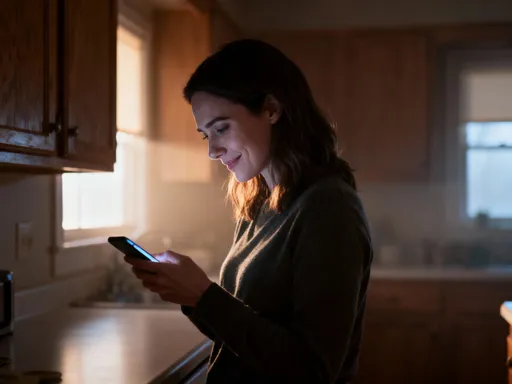
It was a Thursday—nothing special. Just a casual dinner at Sarah’s place, the kind of evening we all look forward to after a long week. The table was set, candles flickering, and someone had already cracked open the second bottle of Pinot. We were deep in conversation about summer plans when my phone buzzed. Not a text. Not a call. A notification from my home app: Motion detected in the living room.
I froze. My smile dropped. Everyone noticed. 'What is it?' Lisa asked, leaning forward. I hesitated, then showed her the screen. 'It’s my house,' I said quietly. 'Something moved in the living room. I’m not sure what.' The room went still for a moment. Then Sarah laughed—not unkindly—but with recognition. 'Oh honey, that’s happened to me too. Last month, I got an alert while I was at yoga and nearly knocked over the whole class rushing to the front.'
We started talking—really talking—about how often we check our phones when we’re out, how many of us have called a neighbor to double-check the garage is closed, or texted a family member just to make sure everything’s okay. That night wasn’t just about one alert. It was the first time we admitted, out loud, how much mental space our homes take up—even when we’re not in them. And it was the night I realized I wasn’t alone in carrying that quiet, constant worry.
But here’s what surprised me: the alert turned out to be my cat, Mr. Whiskers, leaping onto the coffee table after a nap in the sun. No intruder. No emergency. Just a furry little ninja setting off the sensor. I laughed—this time, really laughed—and something shifted. Because instead of panic, I felt relief. And more than that, I felt in control. I had seen what happened, from miles away, without guessing or imagining the worst. That night, I didn’t lose sleep. I didn’t drive home early. I stayed, I enjoyed dessert, and for the first time in a long time, I was truly present.
Why We All Carry a Hidden Worry
Let’s be honest—most of us don’t talk about this enough. That low hum of concern that follows us when we leave the house. It’s not fear, exactly. It’s more like a background noise in our heads: Did I turn off the stove? Is the back window locked? What if the dog barks and no one hears her? For moms, for pet owners, for those of us caring for aging parents’ homes, this isn’t just occasional doubt. It’s a constant companion.
I remember one rainy Saturday, I drove 20 minutes to meet my sister for brunch, only to turn around halfway there because I couldn’t shake the feeling that I’d left the front door unlocked. When I got home, drenched and frustrated, the door was locked. But the damage was done—I’d wasted time, energy, and half my morning for nothing. That’s the thing about worry: it doesn’t care if it’s justified. It just drains you anyway.
And it’s not just about break-ins. It’s about responsibility. About the weight of knowing you’re the one who has to keep things running, keep everyone safe, keep the peace. I’ve had friends tell me they check their security apps during school pickup, during meetings, even in the middle of dinner. One mom confessed she keeps her phone on the table just in case her elderly mother’s motion sensor goes off at night—she needs to know if Mom gets up and might fall.
This kind of constant vigilance isn’t sustainable. It steals joy. It fractures our focus. It turns moments of connection—like a dinner with friends or a quiet evening with a book—into opportunities for anxiety. And the saddest part? Most of us think we’re supposed to just handle it. That worrying is part of being responsible. But what if it doesn’t have to be? What if we could trade that mental load for something lighter—like trust, or peace of mind?
How Motion Detection Works—Without the Jargon
When I first looked into motion sensors, I’ll admit, I was intimidated. The websites were full of terms like “PIR technology,” “lens arrays,” and “detection zones.” It sounded like something an engineer would need, not a mom who just wanted to stop checking her phone every five minutes. But here’s the truth: modern motion detection is designed for people like us. It’s simple, it’s smart, and it’s built to fit into real life.
Think of a motion sensor like a quiet watcher in the corner of the room. It doesn’t see like you or I do. Instead, it notices changes in heat and movement. When something warm—like a person or a pet—moves across its field of view, it sends a signal to your phone. That’s it. No complicated setup. No wires running through the walls. Most of today’s sensors are small, battery-powered devices you can stick to a wall or shelf in minutes.
And no, they don’t record all the time. That’s a big misconception. Most home motion sensors don’t have cameras unless you pair them with one. They’re not watching you—they’re just noticing when something moves. And you can control what kind of alerts you get. Want to know every time the dog jumps on the couch? You can set that. Want to only be notified between midnight and 6 a.m.? You can do that too.
The best part? These devices are built with privacy in mind. Your data stays on your phone or in a secure app. You decide who sees what. And many systems let you turn off sensors when you’re home, so you’re never being monitored when you don’t want to be. It’s not about surveillance. It’s about having a little extra awareness—like a nightlight for your peace of mind.
My First Try—And the Mistakes I Made
I’ll be honest—my first attempt wasn’t perfect. I bought a popular motion sensor online, excited to finally feel safer. I stuck it right in the living room, near the fireplace, because I thought that was the most central spot. Within two hours, I got three alerts. I rushed to check the app, heart pounding—only to see… nothing. No one was there. Just the cat, lounging on the rug.
Turns out, I’d made two rookie mistakes. First, I placed the sensor too close to a heat source. The fireplace, even when off, radiates warmth, and that can confuse some sensors. Second, I hadn’t adjusted the sensitivity. It was set to “high,” so even a slight shift in temperature—a draft from the window, the sun moving across the floor—could set it off.
I’ll never forget the night I hosted dinner. We were just sitting down to eat when my phone buzzed. Then it buzzed again. And again. My guests thought I was getting urgent work messages. Finally, I said, 'It’s just my motion sensor. I think Mr. Whiskers is on the couch again.' We all laughed, but I felt embarrassed. I wanted this to make life easier, not more chaotic.
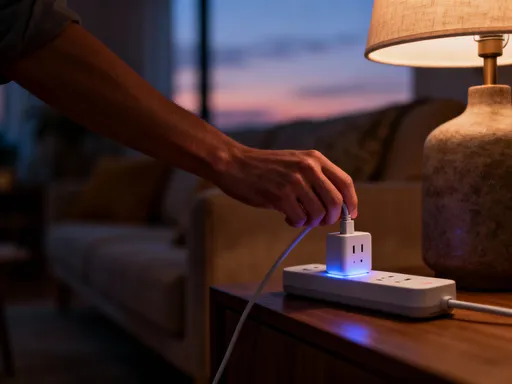
So I took a step back. I read the manual (yes, actually read it). I moved the sensor to a cooler spot, away from vents and windows. I lowered the sensitivity and set a schedule—only active when I’m away or sleeping. I also paired it with a smart plug so that when motion is detected at night, a hallway light turns on automatically. That way, if it’s just me getting water, I’m not startled by the dark—but if it’s someone else, the light might be enough to deter them.
The lesson? You don’t have to get it right the first time. Technology is a tool, not a test. It’s okay to learn as you go. What matters is that you’re taking a step—however small—toward feeling more at ease in your own home.
How It Changed My Friend Gatherings
There’s a moment I’ll never forget. It was a warm summer evening, and we were all gathered on my friend Jen’s deck, glasses in hand, the kind of night where time slows down. No one was on their phone. No one was distracted. And then it happened—my phone lit up with a motion alert. But this time, I didn’t flinch. I didn’t rush to check. I simply glanced at it, saw it was the basement (where the furnace sometimes causes a flicker), tapped to view the camera feed, confirmed it was nothing, and put my phone face down.
Jen noticed. 'You’re not even stressed,' she said. 'A year ago, you’d have been halfway home by now.' And she was right. The difference wasn’t just in the technology—it was in me. I had learned to trust the system. More importantly, I had learned to trust myself. Because now, I wasn’t guessing. I wasn’t imagining the worst. I had information. And with that, came calm.
Since then, my friend nights have changed. I don’t sneak off to text my neighbor to check the front door. I don’t interrupt conversations to refresh my app. I’m here—fully here—because I know if something matters, I’ll know about it. And if it’s just the cat or a shadow, I can let it go.
One night, we were deep in conversation about our kids’ school drama when my phone buzzed. This time, it was real. Motion in the garage, late at night. I stayed calm, opened the app, and saw a figure moving near the door. I called the non-emergency line, gave them the address, and within minutes, a patrol car was on the way. It turned out to be a neighbor’s teen who’d taken a wrong turn, but the point was—I responded with clarity, not panic.
That’s the real gift. It’s not just about catching intruders. It’s about reclaiming your emotional space. It’s about being able to laugh, to listen, to live—without the shadow of worry following you everywhere.
Tips I’ve Shared with My Circle
After seeing how much these sensors helped me, I started telling my friends. Not in a pushy way—more like, 'Hey, if you’re tired of that nagging doubt when you leave the house, try this.' And over coffee, texts, and even a few wine nights, I’ve shared what I’ve learned. Here’s what I always suggest:
Start small. You don’t need to outfit your whole house on day one. Pick one area that worries you most—maybe the front hallway, the basement, or the room where your pet stays. Put one sensor there. Get used to how it works. See how it feels to get that little notification and know you’re in the loop.
Placement matters. Keep sensors away from heat sources like radiators, vents, or sunny windows. Aim for a clear view of entry points—doors, hallways, staircases. And don’t place them too high or too low. Most work best at about 6 to 7 feet off the ground, angled slightly downward.
Test it with someone you trust. Have a friend walk through the room while you watch the app. See how quickly it alerts you. Adjust the sensitivity so it catches real movement but ignores small pets or swaying curtains. Some sensors let you draw “privacy zones” so they ignore certain areas—like where your cat sleeps.
Pair it with smart lights. This is a game-changer. Set it so that when motion is detected at night, a light turns on automatically. It’s not just practical—it’s a great deterrent. And if it’s you getting a snack, well, bonus—you won’t stub your toe.
Choose a system with a simple app. If you have to fiddle with settings every time you want to check in, you’ll give up. Look for one with clear alerts, easy setup, and good customer support. And make sure it works with your phone—no one wants to download five different apps.
Finally, talk to your family. Make sure everyone knows about the sensors, especially if you have teens or older parents. You don’t want Grandma to set it off and think the house is being robbed. A little communication goes a long way.
More Than Security—A Sense of Calm
When I first bought my motion sensor, I thought it was about safety. But over time, I’ve realized it’s about something deeper. It’s about emotional balance. It’s about giving yourself permission to relax, to trust, to believe that it’s okay to enjoy your life without constantly looking over your shoulder.
For caregivers, this tech isn’t just convenient—it’s a lifeline. For pet owners, it’s peace of mind when you’re away. For anyone who’s ever driven back home just to double-check the door, it’s freedom. These small devices don’t eliminate life’s uncertainties. But they do help us manage them—with grace, with clarity, and without fear.
I’ve started thinking of my motion sensor as part of my self-care routine. Like yoga, or journaling, or a long bath, it’s a way of honoring my need for calm. It’s a reminder that taking care of myself isn’t selfish—it’s necessary. And when I feel grounded, I show up better—for my family, my friends, my life.
So the next time you’re out with your girls, laughing over wine, I hope you can stay in that moment. I hope you don’t have to wonder if the back door is locked. I hope you can just be. Because you deserve that peace. And with a little help from today’s smart tech, it’s closer than you think. Your home can look out for you—so you can look out for what matters most.